
What Is Post-Cardiac Injury Syndrome?
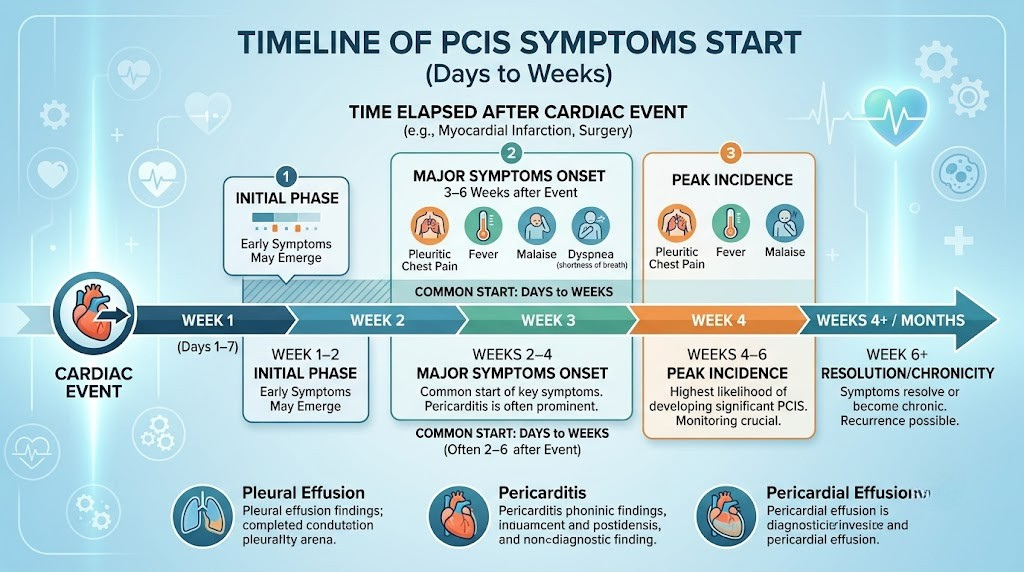
Post-Cardiac Injury Syndrome (PCIS) is inflammation of the heart’s outer lining that develops after a heart attack, heart surgery, or a cardiac procedure. It typically starts one to several weeks after the injury and causes chest pain, fever, and fatigue. Most cases clear up with anti-inflammatory medication within a few weeks.
The medical name for this outer lining is the pericardium, a thin sac that wraps around the heart. When it gets irritated, doctors call it pericarditis. PCIS is one specific type of pericarditis, triggered by injury to the heart rather than an infection.
Key takeaway: PCIS symptoms show up days to weeks after a heart event, not right away. New chest pain immediately after a heart attack or heart surgery should always be treated as a possible emergency first.
Other Names for PCIS
You may see this condition listed under several names, depending on what triggered it:
- Dressler syndrome, the classic name used when PCIS follows a heart attack
- Post-myocardial infarction syndrome
- Post-pericardiotomy syndrome, used after open-heart surgery
- Post-traumatic pericarditis, used after chest trauma or a cardiac procedure
They all describe the same underlying process. Doctors group them under the PCIS umbrella because the symptoms, testing, and treatment overlap so closely.
What Causes PCIS
PCIS happens because the immune system overreacts to damaged heart tissue. After an injury, the body sends in immune cells to clean up and repair the area. In some people, this response goes too far and starts attacking the pericardium itself.
Common triggers include:
- A heart attack (myocardial infarction)
- Open-heart surgery, including bypass surgery or valve repair
- A stent placement or other percutaneous coronary intervention (PCI)
- Pacemaker or defibrillator implantation
- Catheter ablation for an irregular heartbeat
- Blunt trauma to the chest
Symptoms of PCIS
Symptoms can vary from person to person, but the most common ones include:
- Chest pain that worsens when lying down or taking a deep breath, and eases when sitting up
- Low-grade fever
- Fatigue and general weakness
- Shortness of breath
- A rapid or irregular heartbeat
- A friction rub, a scratchy sound a doctor can hear through a stethoscope
Because these symptoms overlap with other heart problems, they should never be self-diagnosed. Anyone with new chest pain after a cardiac event needs a medical evaluation.
Risk Factors
Some people are more likely to develop PCIS than others. Known risk factors include:
- A recent heart attack, especially a larger one
- Recent open-heart surgery
- A previous episode of pericarditis
- Younger age at the time of the cardiac injury
- A viral infection around the same time as the heart injury
How Doctors Diagnose PCIS
PCIS is usually a diagnosis of exclusion. That means your doctor first rules out other possible causes, like a blood clot, infection, or a second heart attack, before confirming PCIS.
Doctors generally look for at least two of these five signs:
- Fever with no other explanation
- Chest pain that fits a pericarditis pattern
- A pericardial friction rub
- Fluid buildup around the heart (pericardial effusion)
- Fluid around the lungs (pleural effusion) along with a raised C-reactive protein (CRP) level
To check for these signs, your care team may order blood work, an electrocardiogram (ECG), an echocardiogram, a chest X-ray, or occasionally a cardiac MRI for a closer look at the pericardium (Mayo Clinic).
Treatment Options
Most cases of PCIS respond well to medication, and full recovery is common.
First-line treatment usually combines:
- An NSAID such as ibuprofen or high-dose aspirin
- Colchicine, an anti-inflammatory drug that also lowers the chance of the condition coming back
Second-line treatment, used when first-line medication doesn’t work well enough, involves corticosteroids. Doctors tend to hold these in reserve because steroids can slow the healing of the injured heart tissue and are linked to a higher chance of recurrence.
If fluid builds up enough to press on the heart, a condition called cardiac tamponade, doctors may perform pericardiocentesis, a procedure that drains the fluid with a thin needle or catheter. If the pericardium becomes thickened and stiff over time, a rare complication called constrictive pericarditis, surgical removal of the pericardium (pericardiectomy) may be needed.
Possible Complications
While most people recover fully, PCIS can occasionally lead to:
- Cardiac tamponade: excess fluid pressing on the heart, which can be life-threatening without prompt treatment
- Constrictive pericarditis: a stiffened pericardium that limits how well the heart fills with blood
- Pleural effusion: fluid buildup around the lungs, causing shortness of breath
A 2025 review in JACC: Advances points out that PCIS has become more common as more people undergo cardiac procedures like stenting, pacemaker placement, and ablation, making early recognition more important than ever (JACC: Advances, 2025).
Outlook and Recovery
The outlook for PCIS is generally good. Most people feel better within one to six weeks once treatment begins, and serious complications are uncommon when the condition is caught early.
A small percentage of people have a recurrence, usually because medication was stopped too soon. Sticking with the full course your doctor prescribes, even after symptoms improve, lowers this risk.
Can PCIS Be Prevented?
There’s no guaranteed way to prevent PCIS, but research on post-pericardiotomy syndrome has looked at giving colchicine right after heart surgery as a preventive measure in higher-risk patients. Talk to your cardiologist or surgeon about whether this approach makes sense for your situation before any planned heart procedure.

When to See a Doctor
Get emergency care right away if you have:
- Sudden or severe chest pain
- Trouble breathing
- Fainting or lightheadedness
- A racing or irregular heartbeat that doesn’t settle down
Call your cardiologist if you notice milder chest discomfort, a low fever, or unusual fatigue in the weeks after a heart attack, heart surgery, or cardiac procedure.
FAQs
What is the difference between PCIS and Dressler syndrome? They’re the same condition. Dressler syndrome is the classic name for PCIS that follows a heart attack, while PCIS is the broader term that also covers cases after heart surgery, stents, or pacemaker implants.
How long does PCIS last? Most cases clear up within one to six weeks once treatment starts. Some people need a longer taper of medication if symptoms return after stopping too soon.
Is PCIS dangerous? PCIS usually responds well to treatment and isn’t life-threatening on its own. In rare cases it can lead to complications like cardiac tamponade, so new or worsening chest pain and shortness of breath should always be checked right away.
Can PCIS happen more than once? Yes, a small percentage of people have a recurrence, especially if treatment stops too early. Completing the full course of medication your doctor prescribes lowers this risk.
Is PCIS contagious? No. PCIS is an immune system reaction to heart injury, not an infection, so it can’t spread from person to person.
What’s the difference between PCIS and a second heart attack? A second heart attack involves a new blockage in a coronary artery, while PCIS is inflammation of the pericardium driven by the immune system. An ECG, blood tests, and echocardiogram can usually tell the two apart quickly.
Conclusion
Post-Cardiac Injury Syndrome is a manageable condition once it’s correctly identified. The chest pain and fever it causes can feel alarming, especially so soon after a heart attack or heart surgery, but most people recover fully with the right combination of anti-inflammatory medication and follow-up care.
If you’ve had a recent heart event and something feels off, don’t wait it out. A quick check from your cardiologist can confirm what’s going on and get treatment started early, when it works best.