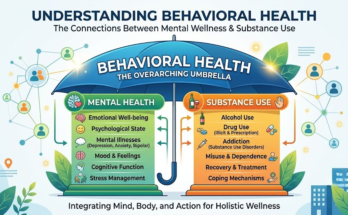
What Is the Mental Health Symbol?
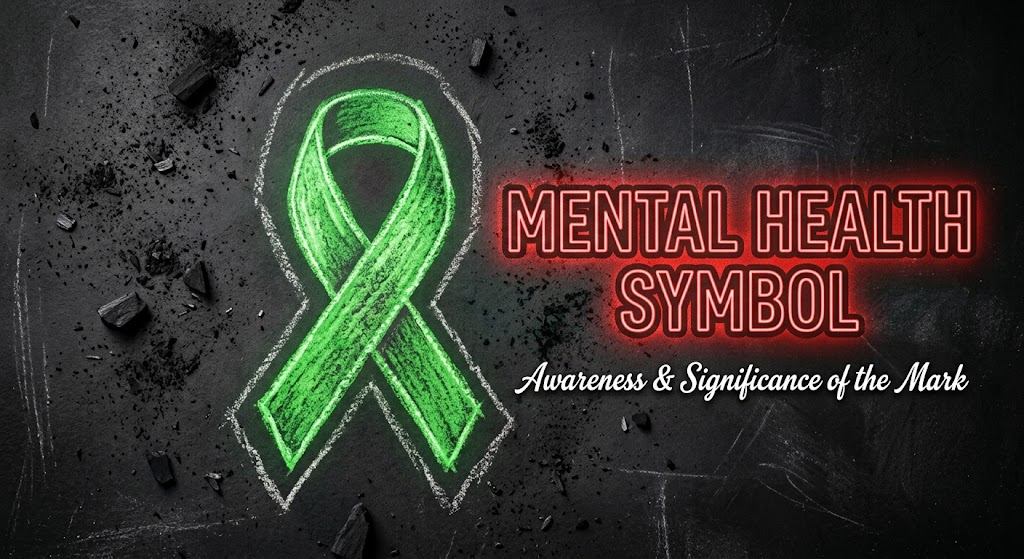
Quick answer: There’s no single official mental health symbol. The green ribbon is the closest thing, used by Mental Health America since the 1940s. The semicolon, tied to suicide prevention, is the second most recognized. Color and symbol meaning shift depending on the specific cause behind them.
Search “mental health symbol” and you’ll get a jumble of results. A green ribbon. A semicolon tattoo. A lotus flower. A brain with a heart tucked inside it. So which one actually counts as “the” symbol?
Mental health awareness has picked up a handful of icons over the years, and each carries a slightly different meaning depending on where you saw it and who’s using it.
The green ribbon comes closest to an official symbol, used by organizations like Mental Health America for decades. The semicolon caught on through Project Semicolon, representing a sentence a life that could have ended but didn’t. Then there are newer, more design-forward icons like the brain-and-heart graphic, which shows up constantly on merch and social posts because it’s simple enough to look good on a t-shirt without needing an explanation.
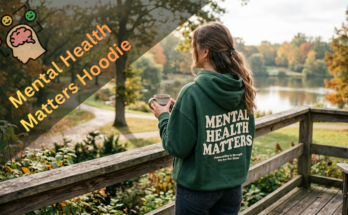
If you’re here because you actually want to wear one of these not just understand it hoodie recommendations are further down. But knowing what’s on your chest before you buy it is what makes the shirt mean something.
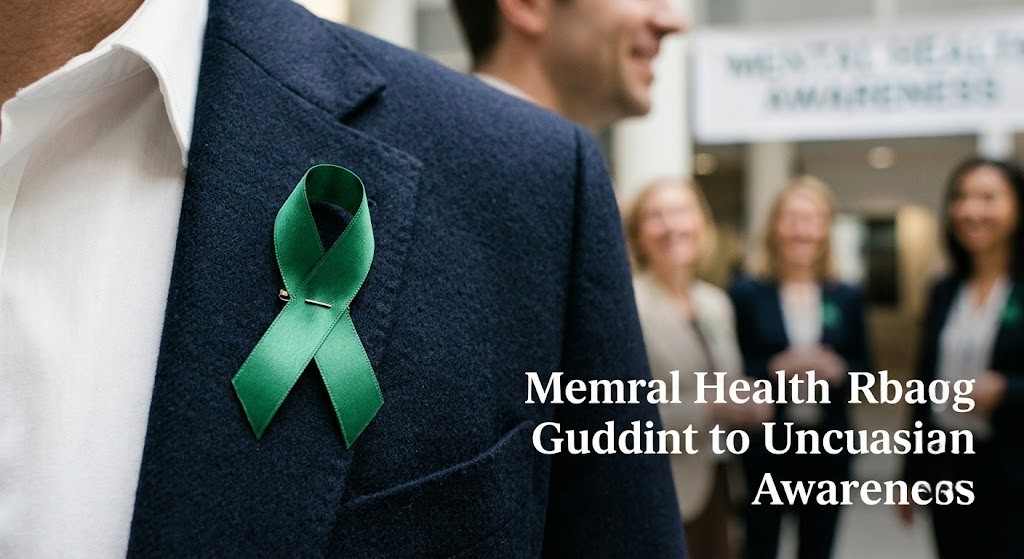
Table of Contents
- What Is the Mental Health Symbol?
- The Green Ribbon: The Official Mental Health Awareness Symbol
- The Semicolon: What It Means and Where It Came From
- Other Common Mental Health Symbols
- Mental Health Awareness Colors Explained
- Mental Health Matters Hoodie: What to Look For
- Best Places to Buy a Mental Health Matters Hoodie
- Mistakes People Make When Buying Awareness Merch
- Wearing the Symbol vs. Actually Supporting the Cause
- FAQs
- Final Thoughts
The Green Ribbon: The Official Mental Health Awareness Symbol
If there’s a real answer to “what’s the mental health symbol,” it’s the green ribbon. Mental Health America has used it since the organization’s early days, and it’s the version you’ll see on official awareness campaigns, Mental Health Awareness Month materials (that’s every May), and hospital programs.
Green got picked on purpose. It’s tied to growth, renewal, and hope the opposite of the shame and silence that used to (and sometimes still does) surround mental illness. Sometimes it’s a simple ribbon pin. Other times it’s woven into logos for nonprofits and treatment centers.
Here’s the catch, though: unlike the pink ribbon for breast cancer, the green ribbon hasn’t reached that same instant-recognition status. Most people won’t clock it the way they’d spot pink in October. That’s shifting, slowly, and it’s part of why other icons have gained so much ground.
The Semicolon: What It Means and Where It Came From
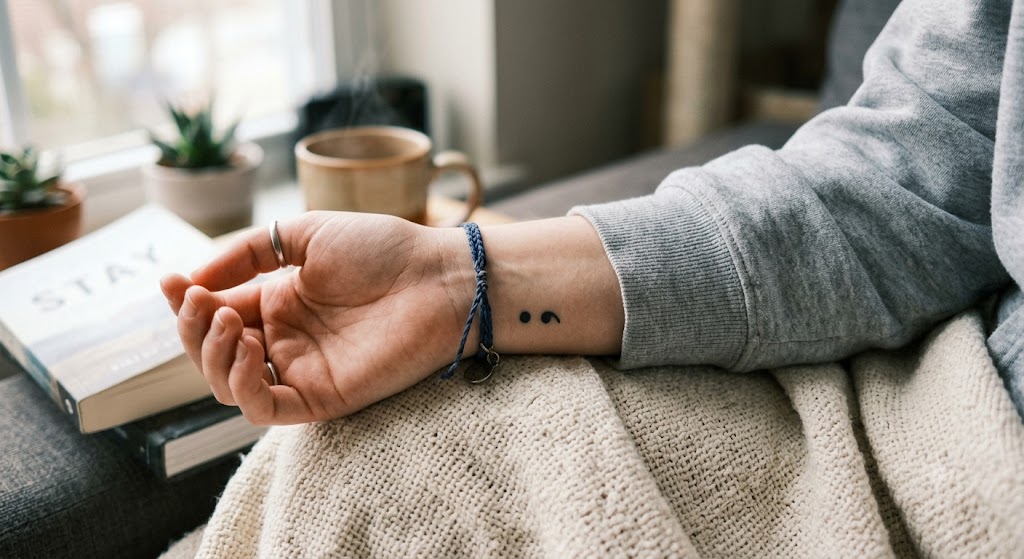
The semicolon symbol traces back to Project Semicolon, a movement Amy Bleuel founded in 2013 after losing her father to suicide. The logic: a writer uses a semicolon when a sentence could have ended but didn’t. The sentence is your life.
It’s become one of the most recognized mental health symbols out there, especially in suicide prevention and survivor circles. You’ll see it as tattoos, jewelry, and plenty of times printed across hoodies and t-shirts.
There’s a trade-off people don’t always think through before getting a semicolon tattoo or wearing the symbol every day: it invites conversation you’re not always in the mood for. I’ve talked to people who love what it means but weren’t ready for a coworker or a stranger in line at Target asking what it stands for. If you’re wearing it for personal reasons, it helps to have an answer ready even if that answer is just “mental health awareness.”
Other Common Mental Health Symbols
A few more icons show up regularly, especially in newer awareness campaigns and merch design:
- Lotus flower — represents growth through struggle, often used in mindfulness and therapy branding
- Brain and heart icon — a simpler, modern graphic meant to show that mental and emotional health are connected
- Puzzle piece — more commonly associated with autism awareness, but occasionally used (sometimes controversially) in mental health contexts
- Butterfly — used loosely across several awareness causes to represent transformation and recovery
- Rainbow or wave patterns — common on newer mental health apparel to represent the ups and downs of mental health, rather than a single fixed state
None of these are “wrong.” Mental health awareness doesn’t have one governing body handing out official symbols the way some causes do, which is exactly why the space feels a little scattered if you’re new to it.
Mental Health Awareness Colors Explained
Shade carries just as much weight as the symbol itself, and this trips people up constantly.
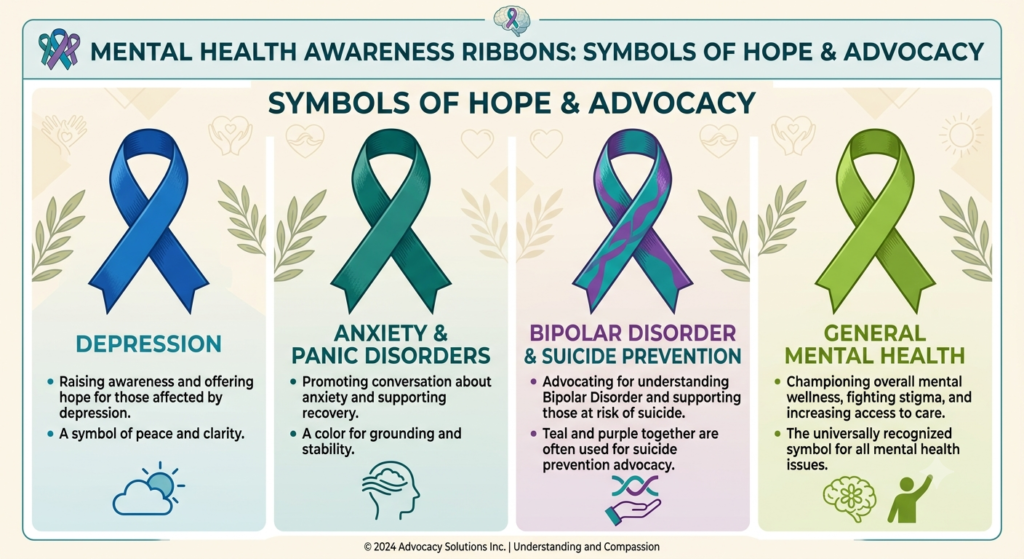
| Color | Represents |
|---|---|
| Green | General mental health awareness |
| Teal | Anxiety awareness; sometimes suicide prevention |
| Purple | Suicide prevention; also epilepsy awareness (a common mix-up) |
| Yellow | Suicide prevention, tied closely to Suicide Prevention Awareness Month in September |
If you’re buying merch as a gift or for a specific cause, matching the shade to the intended meaning actually matters. I’ve seen someone buy a purple ribbon shirt thinking it was breast cancer awareness (that’s pink, not purple) and hand it off to a friend supporting suicide prevention work instead. Small mix-up, but it lands wrong with people who take the symbolism seriously.
Mental Health Matters Hoodie: What to Look For
If you’ve made it this far because you actually want to buy a mental health matters hoodie, here’s what separates a good one from a cheap print job.
Fabric. A lot of awareness merch comes from print-on-demand sites, and consistency swings wildly from shop to shop. Look for at least 50% cotton blends if you want something that survives more than a few washes without pilling or fading out.
Design placement. Small chest logos age better than giant back prints. Big graphics look sharp on day one, then start cracking after a dozen washes especially with the cheaper vinyl printing a lot of these shops use.
Where the money goes. This is the part people skip. Some “mental health matters” hoodies genuinely send a percentage of profit to mental health organizations. Others just slap the phrase on because it sells. If supporting the cause actually matters to you, dig into the seller’s about page or product description for real donation details, not a vague “we care” line.
Sizing. Awareness hoodies run through the same inconsistent print-on-demand measurements as everything else. Check the actual dimensions, not just the S/M/L label, especially with smaller Etsy shops.
Best Places to Buy a Mental Health Matters Hoodie
A few realistic options depending on what you’re prioritizing:
- Nonprofit shops (like NAMI’s official store) if donating to the cause matters most. Fabric’s decent, and you know exactly where your money’s going.
- Etsy independent sellers for unique designs and semicolon or lotus-style graphics you won’t find at big retailers. Consistency varies shop to shop, so check reviews first.
- Print-on-demand sites like Bonfire or Custom Ink if you want a huge range of designs fast. Just know you’re trading some fabric durability for selection and speed.
- Mainstream retailers for basic, sturdy hoodies with simple mental health matters text, minus the higher price tag some awareness-specific brands carry.
None of these wins outright. It comes down to whether you care more about design uniqueness, donation transparency, fabric durability, or just wanting something comfortable to throw on around the house.
🔗 Internal link here: anchor text “how to support a friend struggling with their mental health” → link to How to Support a Friend With Anxiety or Depression
Mistakes People Make When Buying Awareness Merch
- Assuming all “awareness” merch donates to charity. Many don’t. Always check.
- Buying based on the graphic alone. A great design on thin, see-through fabric still isn’t a great hoodie.
- Ignoring the color meaning. Shades carry specific associations, as covered above, and mixing them up can send the wrong message.
- Skipping the return policy. Print-on-demand items are often final sale. If the fit’s off, you may just be stuck with it.
Wearing the Symbol vs. Actually Supporting the Cause
Worth sitting with for a second: wearing a semicolon tattoo or a mental health matters hoodie doesn’t automatically mean you’re supporting mental health causes in any tangible way. That’s not a knock on it representation matters, and normalizing these conversations has real value. But if the goal is actually helping, wearing the symbol is a starting point, not the whole effort.
Donating directly to organizations like NAMI or the American Foundation for Suicide Prevention, checking in on people who might be struggling, or just being someone who doesn’t flinch when a friend brings up therapy those things do more heavy lifting than the shirt ever will. The shirt can open the door to that conversation. It just shouldn’t be the whole conversation.
🔗 Internal link here: anchor text “what is behavioral health” → link to What Is Behavioral Health? A Clear, No-Jargon Explanation
If you or someone you know is struggling, call or text 988 to reach the Suicide & Crisis Lifeline.
FAQs
What is the official mental health awareness symbol?
The green ribbon is the closest thing to an official symbol, used by organizations like Mental Health America since the 1940s.
What does the semicolon mean for mental health?
It represents a sentence, or a life, that could have ended but didn’t. It started with Project Semicolon and is now widely associated with suicide prevention and mental health survivor communities.
What color represents mental health awareness?
Green is the primary shade for general mental health awareness. Teal is often used for anxiety, and purple or yellow are commonly tied to suicide prevention.
Do mental health matters hoodies actually donate to charity?
Some do, some don’t. It depends entirely on the seller. Check the product description or seller’s about page for specifics before assuming.
Is the puzzle piece a mental health symbol?
It’s more commonly associated with autism awareness, though it occasionally shows up in mental health contexts too, which causes some confusion.
Final Thoughts
There’s no single “correct” mental health symbol, and honestly, that’s not really a problem. The green ribbon, the semicolon, the brain-and-heart icon they’re all pointing at the same goal from different corners of the same movement. If you’re picking one to wear, whether it’s a hoodie, a pin, or a tattoo, know what it means first. That’s what turns it from a graphic into something that actually says something.
Ready to wear the message? Look for a mental health matters hoodie from a seller that’s upfront about donations, uses durable fabric, and lets the design mean something beyond a passing trend.